

Student IDs are no longer just cards students wear for identification.
From transportation and meals to library access, campus entry, events, and student services, IDs help answer the same simple question: can this student be quickly and reliably identified?
These moments often involve different departments, systems, partners, and staff teams. When ID-based interactions work well, they are almost invisible. When they break down, staff feel the repercussions immediately.
As districts find more ways to use student IDs across the school day, the ID program becomes more than a set of cards. It becomes part of the infrastructure that keeps campuses running.
Before a credential can connect a student to transportation, meals, library access, or campus services, it has to be issued accurately, on time, and in a format the district can support.
That foundation depends on more than the card itself. It includes thoughtful card design, accurate student data, high-volume batch printing, reliable sorting and distribution, durable materials, and a plan for on-site reprints when cards are lost or damaged. When those pieces work together, the ID program feels seamless.
When they don’t, small issues can quickly become daily friction:
Once the foundation is in place, the next question is not just whether every student has an ID. It is whether that ID is built to support the different ways the district needs to use it.
The future of student IDs is not one format or one technology. It is the ability to customize a credential program around the workflows each district relies on today, while giving them room to adapt as needs evolve.
Student IDs still serve their original purpose: giving staff a quick, visible way to identify students. But today, that same card can also carry the technology a district needs to support its specific systems.
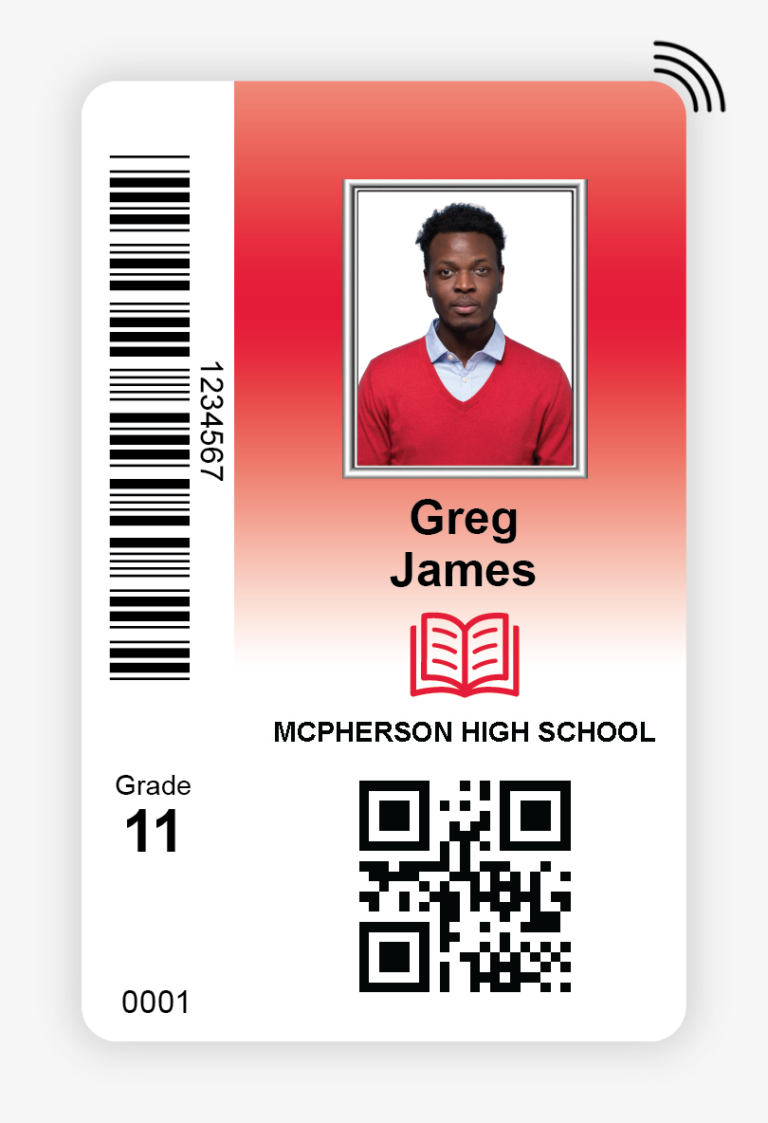
For one district, that may mean RFID/NFC for tap-based interactions. For another, it may mean barcodes or QR codes for scanning. For many, it means a combination of technologies on one credential so the same ID can work across different workflows.
When designed intentionally, a multi-use credential can reduce the need for separate cards, passes, or manual identifiers. It gives districts one consistent student credential that can support multiple systems, use cases, and campus needs.
A multi-use credential may look simple from the student’s perspective. They carry one ID, and that ID helps them board the bus, buy lunch, check out a library book, enter a campus space, or participate in other school activities.
Behind the scenes, those moments may involve different departments, systems, partners, and workflows. Transportation, cafeteria, library, campus access, events, and student services may each depend on separate software or operational processes. That means the same credential has to be encoded, formatted, issued, and supported in a way that works across several environments.
This is where districts need more than a card. They need an intentional ID management plan that accounts for how the credential will be used, what systems it needs to support, how student data is maintained, and how campuses will handle changes, replacements, or troubleshooting.
When something does not work, staff may need to determine whether the issue is with the card, the student data, the reader, the software system, the timing of a record update, or the connection between them. Even if the back-end systems remain separate, the credential strategy should give districts a clear, consistent foundation to manage from.

Use this checklist to identify what is working well, where gaps may exist, and what questions to address before your next card production cycle.
Even when campus systems operate separately, an intentional ID program gives districts a common credential foundation to build from.
The student ID can serve as a shared access point across multiple workflows. It helps different systems recognize the same student through a consistent credential, even when those systems are managed by different departments, vendors, or software platforms.
That creates value today. Students can use one credential across multiple interactions. Districts can reduce the need for separate cards, passes, or manual identifiers. Staff have a clearer process for issuing, replacing, and supporting credentials. Districts can also layer technologies, such as RFID/NFC, barcodes, and QR codes, to support both legacy systems and newer workflows.
This is not the same as uniting every data source behind the scenes, but it is a meaningful step toward a more connected campus. The credential becomes the common layer across systems, giving districts a more consistent way to manage how students are identified across the school day.
The next evolution: connecting interactions
The next step is connecting more of the experience around the credential, including readers, tap events, devices, device management, troubleshooting, and mobile credential options.
That is where the student ID program becomes more than a practical tool for today. It becomes a foundation for the more connected district of tomorrow.
Because every district’s systems are different, the strongest ID programs are built for flexibility.
One district may start with transportation. Another may prioritize cafeteria, library, campus access, events, or student services. One system may rely on RFID/NFC, while another still needs a barcode or QR code. Some districts may want one student ID to support several uses from the start, while others may begin with one workflow and expand over time.
That flexibility also matters as district policies and technologies evolve. Physical IDs may remain the primary credential for many districts, while others may eventually add mobile credentials where policy, infrastructure, and student access allow.
A strong ID program should allow districts to start where they are, support the systems they already use, add new credential technologies over time, and expand into more connected workflows when they are ready.
The goal is not to make every district adopt the same system. It is to give each district a credential foundation that supports where they are today and where they want to go next.
A connected campus does not have to start by replacing every system. It can start by strengthening the student ID program that already connects students to the services, spaces, and supports they use every day.
With the right credential foundation, districts can issue IDs more consistently, support the systems they already use, layer technologies as needs evolve, and give staff a clearer process for managing cards across campuses. Over time, that foundation can also support more connected interactions through readers, devices, tap events, troubleshooting tools, and future mobile credential options.
As student IDs continue to support more of the school day, districts have an opportunity to treat the ID program not as a card project, but as campus infrastructure.

CI Solutions helps K–12 districts design, issue, and manage multi-use student credentials that support transportation, meals, library access, campus workflows, and more.