
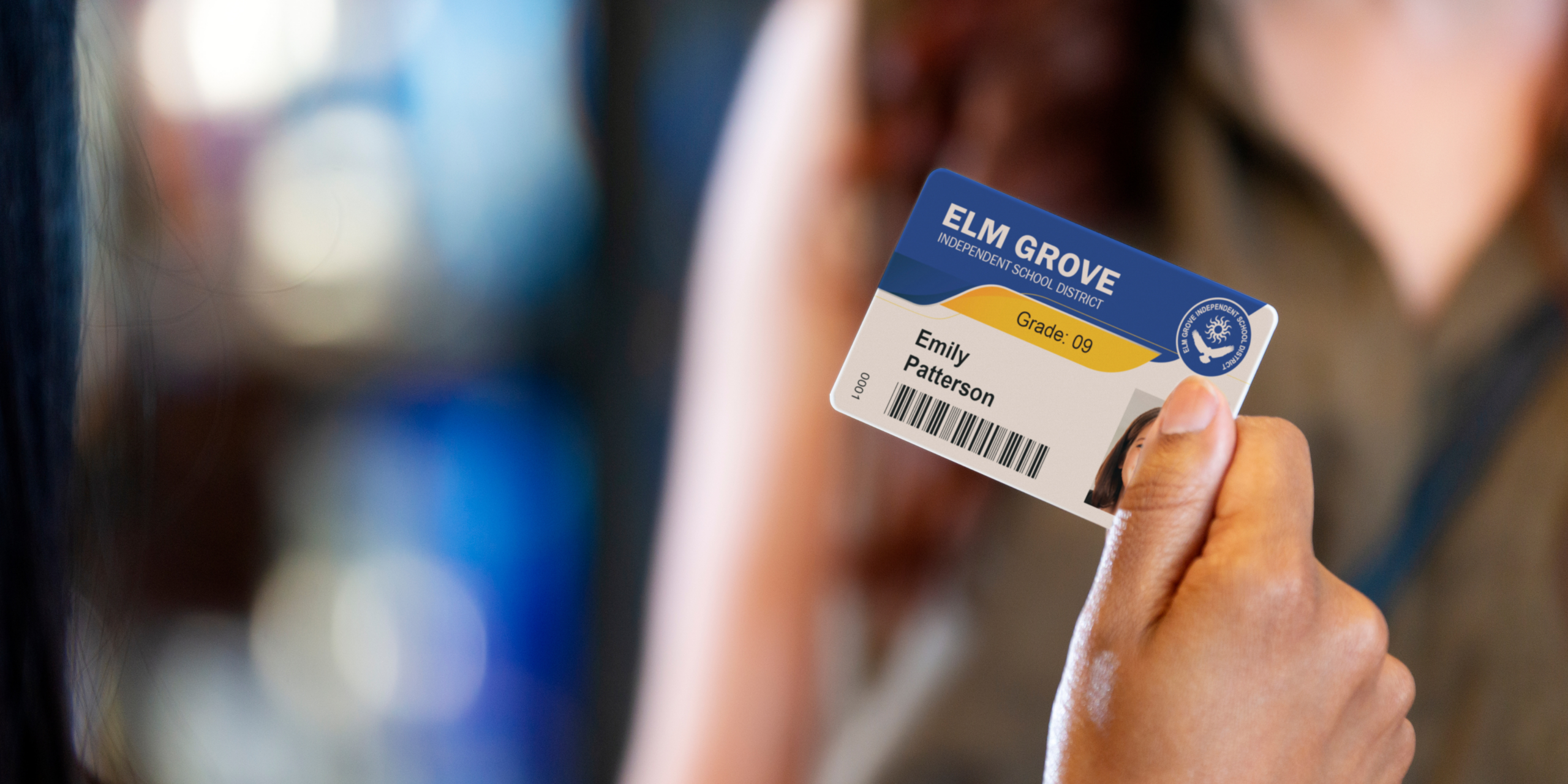
Safety starts with knowing who belongs on campus, and sometimes the most effective tool is the simplest one: the ID card.
Student IDs are sometimes misunderstood as tracking tools. But a well-managed ID program is not about watching students move throughout the day. It is about giving schools a consistent, reliable way to verify identity, support approved campus interactions, and respond when information matters most.
That distinction is important. A scan or tap can confirm that a credential was used for a specific school activity, such as boarding a bus, buying lunch, checking out a library book, or accessing a campus service. It does not create a live map of a student’s day.
To understand the safety value of student IDs, districts need to look at the full program: how IDs are used in daily routines, what information is collected, how cards are protected or replaced, and how staff can use that information responsibly when quick, accurate decisions matter most.
At its most basic level, a student ID helps staff verify identity. It gives schools a quick, visible way to recognize who belongs on campus, who may need assistance, and when something may be out of place.
But in many districts, the ID also supports the daily interactions that keep students moving safely through school.
A well-designed ID program can support transportation, meals, library and resource access, campus entry, events, attendance, check-in/check-out, and student services. In each of these moments, the ID helps staff confirm that a student is using the right service, resource, or access point.
This is where the student ID begins to function as campus infrastructure. Instead of relying on separate passes, cards, paper lists, or memorized numbers, districts can use one consistent credential across multiple workflows.
That consistency matters. When IDs are used regularly and expectations are clear, staff have a simpler process to follow during busy parts of the school day, including arrival, lunch, dismissal, events, and transportation.
The more consistently an ID is used, the more useful it becomes: not just as a way to answer “Who is this student?” but as a shared safety and operations tool across campus.
As student IDs become more useful across campus, families and staff may reasonably ask what information is collected, how it is used, and whether the card can be used to track students.
The simplest answer: a student ID is not a real-time tracking device.
RFID/NFC-enabled cards are passive credentials. They do not include GPS, a battery, or a signal that continuously broadcasts a student’s location. The card only works when it is intentionally scanned or tapped within close range of an approved reader or system.
That interaction may create a record of a specific, approved activity. For example, the system may record that a credential was used to board a bus, buy lunch, check out a library book, enter a campus location, or access a student service.
The information collected and stored is determined by the district before the program is implemented. CI Solutions cards use AES-256 encryption to help protect credential data.
That is very different from continuous monitoring. A scan or tap is a point-in-time interaction, not a live map of a student’s movement throughout the day.
This distinction is important for trust. Districts should be prepared to explain where IDs are used, what information is collected, who can access it, how long it is retained, and how that information is protected.
When families and staff understand what IDs do and do not record, the conversation can stay focused on the real goal: supporting approved school interactions more reliably, consistently, and responsibly.

Use this FAQ page to answer common parent questions about student ID cards, campus safety, privacy, tracking, and everyday use.
Student safety is not only about access to buildings, services, and campus spaces. It is also about making sure schools have reliable ways to support students when attention or action is needed.
In everyday situations, student IDs help staff follow consistent processes: confirming a student’s identity, checking whether they used an approved service, or seeing where a card was last used in a school-supported workflow.
That can become especially important when a student is unaccounted for. In those moments, minutes matter. Schools cannot rely on every staff member knowing every child by sight or remembering every movement across a busy campus. A well-managed ID program can provide another layer of information to help staff respond more quickly and accurately.
In practice, districts are already being recognized for this work. Henrico County Public Schools’ Student Smart ID Card initiative was recognized for enhancing school safety, supporting access to essential services, and helping enable rapid, accurate student identification during emergency reunification.
Student IDs can also keep support resources within reach. Because ID cards are carried throughout the school day, many districts use them to display crisis, mental health, safety, or other student support resources. This gives students a consistent, easy-to-find place for information they may need in a difficult moment.
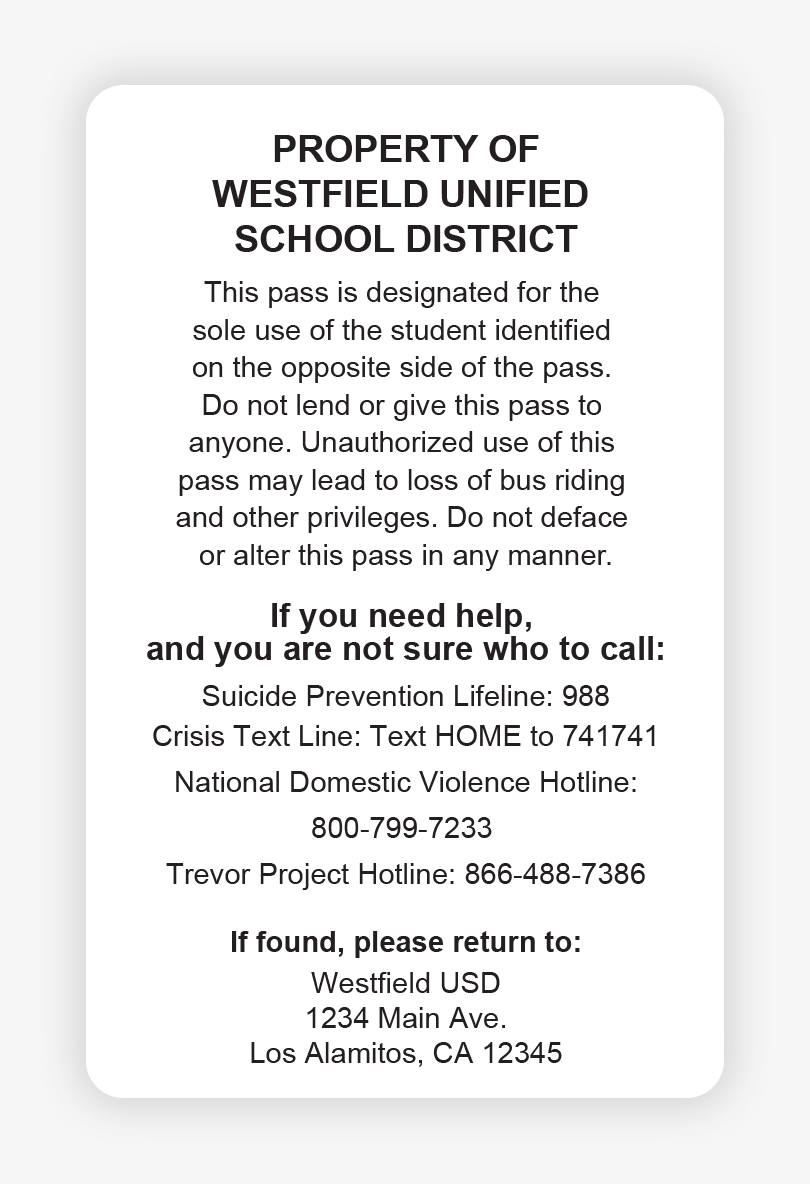
In some states, this has also become part of the ID card design process. California, for example, has requirements for certain schools that issue pupil ID cards to include specific hotline and safety resources. Other states have adopted similar measures, though the details differ by location.
For districts, the takeaway is not just that a card needs to look good. It also needs to be reviewed as a student support and compliance touchpoint. Before each card production cycle, districts should confirm which resources, hotline numbers, or other required information may need to appear on student IDs.
Because student IDs are both customizable and portable, they can give districts a practical way to keep important support resources close by and strengthen the systems staff rely on when students need help.
For student IDs to support safety, they need to work in real life. That means they should be easy for students to use, difficult to misuse, and simple to replace when something goes wrong.
A strong ID program should account for practical details such as:
Districts should also choose card technologies based on the workflows they need to support. Visual identification can help with quick recognition, barcodes and QR codes can support compatible systems, and RFID or NFC can support approved tap-based workflows.
An ID program supports safety best when the card is secure enough for district needs and practical enough for students and staff to use every day.
A student ID will never be the only safety tool a district needs, but it can be one of the most consistent.
That consistency matters in everyday routines and in urgent moments. IDs help staff verify who belongs on campus, support access to approved services and spaces, keep important support resources within reach, and create clear records of event-based interactions without becoming continuous tracking tools.
When a student is unaccounted for, minutes matter. Schools need reliable systems that help staff act quickly and accurately, not processes that depend only on memory, paper lists, or whether one staff member happens to recognize a student by sight.
Student IDs work best when they are part of a larger system that includes clear policies, staff training, practical replacement processes, secure data handling, and transparent communication with families.
As districts modernize their ID programs, the goal should be to protect both student safety and student trust.
When designed thoughtfully, the student ID becomes more than a card students carry. It becomes a visible, practical layer of safety, support, and accountability across the school day.

CI Solutions helps K–12 districts design, issue, and manage student IDs that support campus safety, resources, and workflows.